-
 Anglický jazyk
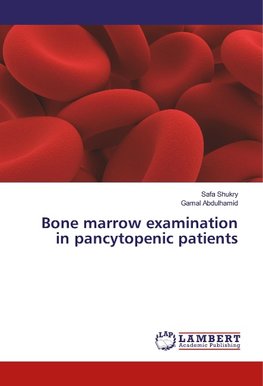
Bone marrow examination in pancytopenic patients
Autor: Safa Shukry
Pancytopenia refers to a reduction in all three formed elements of blood i.e. erythrocytes, leukocytes, and platelets. It is seen in both, peripheral and bone marrow, in most cases of bone marrow failure. The study of bone marrow failure or pancytopenia... Viac o knihe
Na objednávku
70.30 €
bežná cena: 74.00 €
O knihe
Pancytopenia refers to a reduction in all three formed elements of blood i.e. erythrocytes, leukocytes, and platelets. It is seen in both, peripheral and bone marrow, in most cases of bone marrow failure. The study of bone marrow failure or pancytopenia is traditionally dated to 1888, was provided by Paul Ehrlich under the 'aplastische Anämia' name from an autopsy of young white pregnant women, who died about a month after the onset of an illness , characterized by menorrhagia, retinal hemorrhage and marked pallor, associated with fever, and ulcerated gum. At autopsy, no active marrow was noted; hypocellular and fatty marrow were showed. As a pathologist, Ehrlich attributed this to primary depression of marrow function. Pancytopenia results from a number of disease processes due to bone marrow failure. Pancytopenia is not a disease entity but triads of finding which makes the patient prone to anemic manifestations, infections, and bleeding tendency. These clinical consequences (anemia, neutropenia, and thrombocytopenia) depending on the degree and duration of their impairment, can lead to serious illness and death.
- Vydavateľstvo: LAP LAMBERT Academic Publishing
- Rok vydania: 2019
- Formát: Paperback
- Rozmer: 220 x 150 mm
- Jazyk: Anglický jazyk
- ISBN: 9786139962419


 Nemecký jazyk