-
 Anglický jazyk
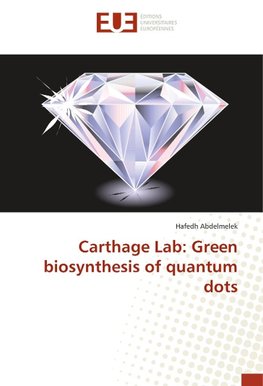
Carthage Lab: Green biosynthesis of quantum dots
Autor: Hafedh Abdelmelek
The purpose of this Carthage Lab's research, was to study the toxicity of X2+ elements such as cadmium (Cd) or Zinc (Zn) and to explore their potentials to generate nanoparticles and especially quantum dots, during detoxification. In order to demonstrate... Viac o knihe
Na objednávku
35.15 €
bežná cena: 37.00 €
O knihe
The purpose of this Carthage Lab's research, was to study the toxicity of X2+ elements such as cadmium (Cd) or Zinc (Zn) and to explore their potentials to generate nanoparticles and especially quantum dots, during detoxification. In order to demonstrate this in vivo fluorescence imaging, X-ray diffraction and flow cytometry, were performed. The in vivo imaging showed a fluorescence signal after Cd or Zn treatment. By contrast, the control fluorescence was negative. The fluorescence was subdivided in three colors, red, yellow, and green and this probably indicates the presence of quantum dots. X-ray diffraction results revealed the presence of Cd sulfide (CdS) and/or Cd selenide (CdSe), Zn sulfide (ZnS) and/or Zn selenide (ZnSe) nanoparticles following Cd or Zn administration in plants, bacteria, mold, rat liver and kidneys. Interestingly, flow cytometry revealed a heterogeneous size distribution and a homogeneous granularity of synthesized nanoparticles.
- Vydavateľstvo: Éditions universitaires européennes
- Rok vydania: 2017
- Formát: Paperback
- Rozmer: 220 x 150 mm
- Jazyk: Anglický jazyk
- ISBN: 9786202272438

 Nemecký jazyk