-
 Anglický jazyk
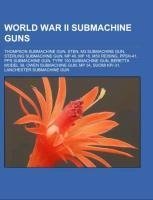
World War II submachine guns
Autor: Source: Wikipedia
Source: Wikipedia. Pages: 50. Chapters: Thompson submachine gun, Sten, M3 submachine gun, Sterling submachine gun, MP 40, MP 18, M50 Reising, PPSh-41, PPS submachine gun, Type 100 submachine gun, Beretta Model 38, Owen submachine gun, MP 34, Suomi KP/-31,... Viac o knihe
Na objednávku, dodanie 2-4 týždne
17.10 €
bežná cena: 18.00 €
O knihe
Source: Wikipedia. Pages: 50. Chapters: Thompson submachine gun, Sten, M3 submachine gun, Sterling submachine gun, MP 40, MP 18, M50 Reising, PPSh-41, PPS submachine gun, Type 100 submachine gun, Beretta Model 38, Owen submachine gun, MP 34, Suomi KP/-31, Lanchester submachine gun, MAS-38, United Defense M42, Austen submachine gun, BSA Welgun, MP35, PPD-40, Blyskawica submachine gun, TZ-45, ZK-383, Orita M1941, OVP, MP 3008, FNAB-43, Danuvia 43M submachine gun, M2 Hyde, EMP 44, Variara submachine gun, Erma EMP-35, Type II machine pistol, Mors submachine gun, Bechowiec-1, Arsenal submachine gun, Lettet-Forsøgs submachine gun, KIS, Tokyo Arsenal Model 1927, Beretta Model 1918, MCEM 1 submachine gun, Pistolet-pulemet. Excerpt: The Thompson is an American submachine gun, invented by John T. Thompson in 1919, that became infamous during the Prohibition era. It was a common sight in the media of the time, being used by both law enforcement officers and criminals. The Thompson was also known informally as: the "Tommy Gun", "Trench Broom", "Trench Sweeper", "Chicago Typewriter", "Chicago Piano", and "chopper". The Thompson was favored by soldiers, criminals, and police alike for its ergonomics, compactness, large .45 ACP cartridge, reliability, and high volume of automatic fire. It has since gained popularity among civilian collectors for its historical significance. The Thompson Submachine Gun was developed by General John T. Thompson who originally envisioned an auto rifle (semi-automatic rifle) to replace the bolt action service rifles then in use. While searching for a way to allow such a weapon to operate safely without the complexity of a recoil or gas operated mechanism, Thompson came across a patent issued to John Bell Blish in 1915 based on adhesion of inclined metal surfaces under pressure. Thompson found a financial backer, Thomas F. Ryan, and started the Auto-Ordnance Company in 1916 for the purpose of developing his auto rifle. The principal designers were Theodore H. Eickhoff, Oscar V. Payne, and George E. Goll. By late 1917, the limits of the Blish Principle were discovered: rather than working as a locked breech, it functioned as a friction-delayed blowback action. It was found that the only cartridge currently in U.S. service suitable for use with the lock was the .45 ACP round. Thompson then envisioned a "one-man, hand-held machine gun" in .45 ACP as a "trench broom" for use in the on-going trench warfare of World War I. Payne designed the gun itself and its stick and drum magazines. The project was then titled "Annihilator I", and by 1918, most of the design issues had been resolved. However, the war ended before prototypes could be shipped to Europe. At an Auto-Ordnance boa
- Vydavateľstvo: Books LLC, Reference Series
- Rok vydania: 2012
- Formát: Paperback
- Rozmer: 246 x 189 mm
- Jazyk: Anglický jazyk
- ISBN: 9781155300955


 Ruský jazyk