-
 Anglický jazyk
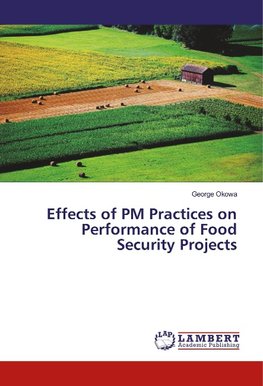
Effects of PM Practices on Performance of Food Security Projects
Autor: George Okowa
Food security projects are temporary endeavors aimed at providing permanent solutions to societal problems. They are characterized by substantial investment commitment, vast complexity and a long-lasting impact on society, environment and largely are considered... Viac o knihe
Na objednávku, dodanie 2-4 týždne
48.74 €
bežná cena: 51.30 €
O knihe
Food security projects are temporary endeavors aimed at providing permanent solutions to societal problems. They are characterized by substantial investment commitment, vast complexity and a long-lasting impact on society, environment and largely are considered pillars of the economy. They have requirements for the control and coordination of a vast and complex range of social, technical and financial resources to turn them into reality. Massive investments by various stakeholders are pumped to ensure performance of these projects. Despite their criticality, reports on the abysmal performance, higher failure rate, unsatisfactory performance and long-term benefits realization of such projects are universal. These failures have prompted researchers including this study to consider project management (PM) practices as a possible cause of failure of such projects. The study is grounded in registered food security projects in Kilifi County and a systematic, empirically based methodology that employs descriptive survey to identify the correlation between project management practices and performance, to pave the way to an understanding of their effects to the food security projects.
- Vydavateľstvo: LAP LAMBERT Academic Publishing
- Rok vydania: 2018
- Formát: Paperback
- Rozmer: 220 x 150 mm
- Jazyk: Anglický jazyk
- ISBN: 9786136995533